





WPD launches most ambitious Low Carbon Heating Strategy to date
Posted by: electime 27th June 2022
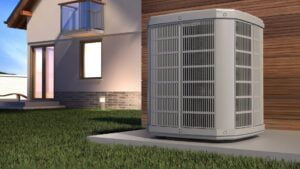
Western Power Distribution (WPD), the distribution network operator for the Midlands, South West and South Wales, has used its most ambitious Low Carbon Heating Strategy so far to set out how it intends to connect customers across its network to a wide array of low carbon heating technologies (LCTs).
The strategy lays the foundations for the decarbonisation of domestic heating by recognising that homeowners face a range of heating options, and should not have their choices limited by constraints on the network. With this in mind, WPD has developed a strategy to facilitate the adoption of low carbon heating and to create a network that is flexible, resilient and ready ahead of need. In line with WPD’s RIIO-ED2 Business Plan, this means that customers will be able to connect LCTs quickly and affordably without capacity being a barrier.
In its strategy, WPD outlines the various connections that may be required for a range of customer types and their potential impact on the local network.
The updated document details how WPD will pave the way for the large scale connection of heat pumps by installing larger cable assets on new build substations. Its use of innovative solutions to allow for faster and more efficient heat pump connections will help reach the government’s goal of 600,000 heat pump connections a year by 2028. WPD is projecting that it will connect over 628,000 heat pumps across its network during the next price control period in 2023-28.
When it comes to heat network systems, WPD will ensure the electrical system can support district heating networks at all locations. It expects heat networks to be easily accommodated as the input energy required will be provided to one central point rather than to individual homes. In some cases, heat network systems will have generation elements that help balance the wider grid – this is also incorporated into WPD’s forecasting.
The strategy also touches on technologies not yet widely seen in UK homes including thermal storage, combined heat and power, hydrogen and solar district heating plants. WPD foresees that all these technologies will play a role in the future of UK’s domestic heating.
To help understand the impact of net zero homes on the grid, WPD will use information supplied by Sero and POBL Housing Association based on the energy use of 250 new build homes fitted with a complete suite of LCTs, including electric vehicle chargers, solar panels, battery storage and heat pumps.
By taking these steps, WPD is putting itself at the forefront of low carbon technologies and as an enabler of heat decarbonisation in all its forms by avoiding the need for expensive network reinforcements, down the line.
Explaining the low carbon heating strategy, Paul Jewell, WPD’s System Development Manager said: “This is our most comprehensive strategy yet and details how WPD will play a formative role in decarbonising the UK’s domestic heating by accounting for the various network connections needed for not only heat pumps but district heating networks, thermal storage and hydrogen, to name just a few.
“While insulation measures are crucial for decarbonising the UK’s housing stock, the efficiency of low carbon technologies relies on network operators like WPD and our ability to map homeowners’ future demand patterns, connect LCTs in near real-time and reinforce the electricity network. This is how we will pave the way for reducing the carbon footprint of our homes and ultimately reach net zero by 2050.”
In its Business Plan for 2023 – 28, WPD is proposing to invest £6.7 billion across its network, boosting network capacity and allowing the mass connection of LCTs to accelerate a sustainable, net zero future.
The Strategy can be found here.


