






Top ten local authorities with the largest renewable energy capacity in megawatts per 1,000 households
Posted by: electime 23rd May 2025
- Moray leads the UK for renewable energy capacity per household, generating 47.4 megawatts (MW) per 1,000 homes — the highest in the country.
- Scotland dominates onshore wind generation, with Highland, Dumfries and Galloway, and South Ayrshire all ranking in the top five for wind capacity per household.
- North East Lincolnshire tops offshore wind rankings and sees record growth, with over 2,800 MW installed and a 1,017 per cent increase in capacity since 2018.
- Discover more on clean energy in the UK through Uswitch’s Renewable Energy Statistics
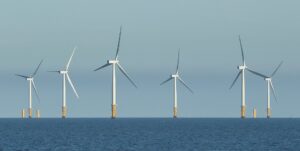 New Uswitch analysis of government data has revealed the UK’s top-performing local authorities for renewable energy generation per household, with Moray in Scotland emerging as the national leader.
Table 1: Top ten local authorities with the largest renewable energy capacity in megawatts per 1,000 households
| Rank | Local authority | Capacity in megawatts per 1,000 households |
| 1 | Moray | 47.4 |
| 2 | North East Lincolnshire | 41.4 |
| 3 | Boston | 32.0 |
| 4 | East Lothian | 27.3 |
| 5 | Highland | 26.3 |
| 6 | Lancaster | 23.1 |
| 7 | Dumfries and Galloway | 18.9 |
| 8 | North Norfolk | 18.8 |
| 9 | Argyll and Bute | 17.3 |
| 10 | East Suffolk | 15.8 |
Moray leads the UK with 47.4 MW per 1,000 households, followed by North East Lincolnshire at 41.4 MW. Other notable regions include Boston (32.0 MW), East Lothian (27.3 MW), and Highland (26.3 MW).
Scottish local authorities rank highly, reflecting a mix of strong investment and favourable conditions for wind power, such as higher wind speeds and suitable terrain. The data highlights how both geography and different local approaches play a role in shaping the UK’s renewable energy landscape.
Areas with the most solar and wind power
The UK regions with the highest solar, onshore, and offshore wind capacity per household (excluding other renewable sources due to data limitations).
Solar photovoltaics: East Cambridgeshire leads with 4.4 MW per 1,000 households, followed by South Cambridgeshire (4.3 MW). Pembrokeshire and Torridge each generate 4.0 MW, with several rural areas making strong gains in solar capacity.
Onshore wind: Highland tops the list with 18.3 MW per 1,000 households, followed by Dumfries and Galloway (13.1 MW) and South Ayrshire (12.7 MW), showcasing Scotland’s dominance in wind energy.
Offshore wind: North East Lincolnshire leads with 40.4 MW per 1,000 homes, followed by Moray at 35.0 MW. Other key contributors include Boston and East Lothian, highlighting the importance of coastal regions in offshore wind generation. North East Lincolnshire’s growth is driven by major projects like the Hornsea Wind Farm series, Hornsea One and Two, with capacities of 1.2 GW and 1.4 GW respectively. They are the largest offshore wind farms in the world as part of Ørsted’s East Coast Hub in Grimsby.
Table 2: Top ten local authorities with the largest growth in renewable energy capacity over 5 years (2018–2023)
| Rank | Local authority | Change in capacity over 5 years |
| 1 | North East Lincolnshire | 1017 per cent |
| 2 | Boston | 9857 per cent |
| 3 | East Lothian | 7347 per cent |
| 4 | Inverclyde | 6087 per cent |
| 5 | Rugby | 4447 per cent |
| 6 | Aberdeen City | 4377 per cent |
| 7 | Sutton | 2737 per cent |
| 8 | Hammersmith and Fulham | 2637 per cent |
| 9 | Spelthorne | 2627 per cent |
| 10 | Barnet | 2157 per cent |
North East Lincolnshire leads with a 1,0177 per cent growth in renewable energy capacity from 2018 to 2023, followed by Boston (9857 per cent) and East Lothian (7347 per cent). Urban areas like Sutton, Hammersmith and Fulham, and Barnet also show substantial increases, reflecting rapid growth in both rural and urban renewable energy generation.
Table 3: Five-year change in renewable energy types (2018–2023)
| Renewable energy type | 5 year change (2023-2018) |
| Offshore Wind | 80.207 per cent |
| Municipal Solid Waste | 37.107 per cent |
| Photovoltaics | 24.307 per cent |
| Anaerobic Digestion | 19.707 per cent |
| Onshore Wind | 15.007 per cent |
| Sewage Gas | 8.607 per cent |
| Plant Biomass | 2.707 per cent |
| Hydro | 0.707 per cent |
| Animal Biomass | 0.007 per cent |
| Landfill Gas | -0.307 per cent |
| Wave/Tidal | -52.007 per cent |
Methodology & Sources
We took UK government data on renewable energy generation for the last 10 years and used it to calculate:
- The overall change in renewable capacity from 2014-2023.
- The top local authorities by renewable capacity (2023)
- The top local authorities by increase/decrease in renewable capacity (2018-2023)
- The biggest types of renewable energy generation in the UK by capacity (2023)
- The local authorities with the most solar and wind capacity (2023)
Where local authority changes had taken place in the period covered data from the old authorities was grouped into the relevant new authority to allow for comparisons.
https://www.gov.uk/government/statistics/regional-renewable-statistics


