








Growth in UK residential and workplace solar PV creates local low voltage network challenges for DNOs in 2026, says EA Technology
Posted by: electime 3rd February 2026
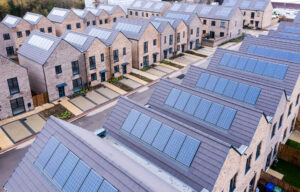
The ongoing growth in the adoption of solar PV panels on homes and commercial and public buildings means distribution network operators (DNOs) are reassessing how they monitor the UK’s final mile electrical distribution networks to manage possible spikes and dips in voltage caused by surplus solar energy being imported back to the grid.
Commenting on the issue, David Mills, Head of Consulting at EA Technology, the leading provider of technology solutions supporting the energy transition, said, “The nationwide increase in solar PV deployments during 2025 is a UK renewable energy success story that is making a real difference in terms of cutting CO2 emissions and reducing energy bills for households and companies who install them.
“The task for DNOs comes from household and workplace solar PV systems that are now exporting the surplus energy they generate back to the grid. The low voltage (LV) network transporting this energy was originally designed to carry electricity in one direction only, from the substation to the endpoint like a house or business.”
David explained, “Adding more solar generation to the network can affect its stability and lead to incidents of overly high voltage at customers’ properties. This could cause outages in modern sensitive equipment such as electric vehicle charging points. DNOs are therefore investing in methods to monitor this on their networks more frequently.”
He went on, “In-depth monitoring of voltage levels across the distribution network gives operators the visibility and grid-edge intelligence that they need to keep the network stable and properly manage the extra traffic created by more and more decentralised generation points connecting to and feeding into the grid.”
David’s comments follow the announcement of the Government’s new £15 billion “Warm Homes Plan” to help millions of households cut their energy bills by installing solar panels, batteries, heat pumps and insulation at home.
Homeowners will be able to apply for government-backed, low and zero interest loans to install rooftop solar panels, home batteries and heat pumps at their properties.
David continued, “But the operational benefits of more accurate network-wide grid-edge intelligence doesn’t stop there.
“It’s also the means by which DNOs can more accurately forecast and identify at a local level which locations they need to add in extra capacity that’s required.
“It’s the same whether it’s a new solar PV system, a new electric vehicle charging point, or a new heat pump. Accurate, frequent, automated monitoring gives DNOs more insight, more granular understanding and more visibility – firstly, where these new connections are appearing on the network: and second, when and where people are using energy and how much they’re using.
“DNOs no longer have to rely on infrequent estimates”, he explained. “With actionable grid-edge intelligence, they can develop better informed and more precise forecasts and models around future electricity consumption and demand, in a way that accounts for phenomenon such as concentrated clusters from new housing developments, and statistical variability.
“Operators can then direct their investment in new infrastructure assets to where they are most needed on the network and where they will make the largest positive difference to customers.”
David concluded by saying, “This level of insight will be crucial in the next 12 months and beyond as DNOs upgrade their networks to keep pace with increased demand due to electrification and the net zero transition in the most cost-efficient way.”


