







The paperwork gap that’s costing electrical firms billable hours
Posted by: electime 18th September 2026

Ask most electrical firms how they’d answer a client who wants evidence of a specific install—what was done, when, by whom, to what standard—and the honest answer is: it depends how far back you’re asking. Recent work, an easier problem. A query from a few months ago, and you’re into paper records, scattered photos, and site diaries, trying to piece together a record that should have been there all along.
That gap isn’t really about compliance failing. The work itself is usually sound. It’s that the evidence behind it lives in too many places to produce quickly when someone asks for it.
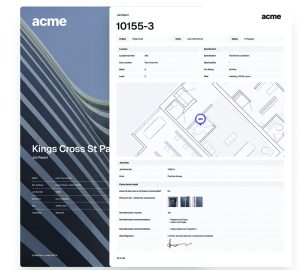
That’s the exact problem Onetrace solves. Onetrace is a platform that lets electrical subcontractors capture compliance evidence—photos, forms, sign-offs—directly from site in real time, tied to the specific job and location. Instead of piecing a record together after the fact, it’s already organised and ready to produce the moment someone asks for it.
The hidden cost of no single source of truth
Every hour spent chasing down evidence, reassembling records, or reformatting a report for a client is an hour not billed. Multiply that across a team and a year of jobs, and admin stops being background noise—it’s a real cost sitting quietly on the books.
It shows up in cash flow too. A handover that’s held up by missing or scattered paperwork is a handover that’s held up, full stop. Invoices wait behind sign-off. Sign-off waits behind someone finding the right photo or the right test result. None of that is billable time, and none of it needs to happen if the record exists in the right shape from the start.
And it shows up in how bigger clients see you. Tier 1 main contractors are asking sharper questions than they used to, and increasingly they’re judging subcontractors on how professional the paperwork looks, not just the install. A scrappy handover pack—photos with no context, a folder full of loose files—reads as a risk, even when the underlying work is excellent. A clean, branded, well-organised record reads as a firm worth trusting with more.
Built for the job, not for reconstructing it afterward
Here’s what Onetrace looks like day-to-day:
Evidence—photos, forms, checklists—captured on site in real time and pinned to the right location, rather than typed up later from memory.
Forms built around mandatory fields, so a job can’t be marked complete
One-click branded PDF or Excel reports, ready to hand a client or main contractor without hours spent formatting one.
Real-time status tracking, so a supervisor can see at a glance what’s done, what’s outstanding, and what’s waiting on sign-off.
None of this changes the standard of work an electrical team delivers. It changes how fast and how convincingly that standard can be proved—to a client, to building control, or to a Tier 1 contractor deciding who to award the next package to.
The record that wins you the next job
Less time spent chasing paperwork means more billable hours in the week. Faster, complete handovers mean invoices go out sooner instead of waiting behind admin that should have been done already. And a consistently professional record—the same standard, every job, every client—is what turns a one-off contract with a bigger main contractor into a repeat one.
Put simply: the firms that can prove their work fastest are usually the ones that get asked back. Compliance stops being a cost centre and starts working in your favour—less admin, quicker payment, and a reputation with Tier 1 contractors that helps you win the next job, not just finish this one.
For electrical subcontractors working across high-compliance environments, that shift is the difference between chasing paperwork and letting it work for you.
To see how Onetrace works for electrical contractors, book a demo at onetrace.com.


