






Ready when the storm hits
Posted by: electime 16th November 2026

Andrew Keith
The UK has already experienced its first named storms of the 2026/27 season, with Austen and Boelo bringing severe weather in October. With Chloe next on the Met Office’s list, further disruption remains a concern as the country moves into winter. But while operators may know what the next storms will be called, how confident can they be that their backup power systems will perform when needed? Here, Andrew Keith, Division Director at load bank manufacturer Power Prove, explains why testing backup power under load should form part of storm preparation.
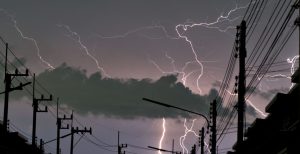 Severe weather is becoming an increasingly important consideration for infrastructure operators. According to the latest State of the UK Climate report, “weather extremes are becoming more frequent, increasing the risk of disruption for organisations that rely on continuous power.”
When outages occur, backup generators and uninterruptible power supply (UPS) systems may be required to maintain essential operations for extended periods. This challenge can become even greater when severe weather restricts site access, delays maintenance activities or disrupts fuel deliveries. Operators therefore need confidence that backup power systems can perform under the electrical demand they may be required to carry when normal power supplies are unavailable.
At-risk systems
Storms and flooding can disrupt electricity infrastructure and make sites difficult to access, creating operational challenges for businesses and essential services. Storm Goretti, which affected the UK in January 2026, demonstrated how severe weather can create multiple simultaneous challenges. The Met Office reported that tens of thousands of properties lost power, while debris blocked roads and all train services in Cornwall were suspended.
Backup generators and UPS systems are designed to provide continuity during these interruptions, but their ability to do so depends on their condition and the loads they are required to support. A system that starts successfully during a routine check may still contain weaknesses that only become apparent under sustained electrical demand.
Starting is only the first test
A generator starting successfully demonstrates that its engine and associated systems can initiate operation. It does not establish that the generator can maintain stable performance while supplying the facility’s electrical demand.
Issues such as restricted fuel flow, inadequate cooling or voltage instability may only become apparent during sustained operation at higher loads. Problems that remain hidden during routine checks can emerge when a generator is required to support critical equipment for an extended period.
The same principle applies to UPS systems. Having a UPS in place does not establish how long its batteries can sustain essential equipment or whether performance has degraded over time. This makes it important for operators to assess backup systems against the loads they would need to support during an outage.
Proving performance under load
Load banks provide a controlled way to assess the electrical performance of generators and UPS systems by applying a known electrical demand. Engineers can progressively increase the load and monitor voltage and frequency stability as demand changes.
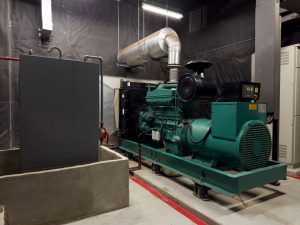 Testing at or near operating capacity can reveal issues that routine start-ups or no-load checks may not identify. Sustained loading allows engineers to assess generator performance while the engine, alternator, cooling system and fuel supply are all operating under demand.
The test profile should reflect the facility’s requirements so engineers can evaluate whether equipment can support the loads it may need to carry during an outage. Battery discharge testing provides a different assessment for UPS systems, helping establish available battery capacity and runtime under defined conditions.
Load bank testing should form part of a wider testing and maintenance programme. It assesses electrical performance under test conditions rather than reproducing every factor associated with an extreme weather event. Flooding, restricted site access and transfer sequences require separate consideration as part of broader resilience planning.
The value of testing comes from what operators do with the results. If testing identifies inadequate capacity, unstable voltage or another performance issue, there is an opportunity to resolve it before severe weather creates an urgent requirement for backup power.
The names assigned to storms may change each year, but the need for dependable backup power remains. Testing generators, UPS systems and batteries under appropriate load conditions gives operators evidence of how their equipment performs and time to address weaknesses before severe weather puts those systems to the test.


