








CU Phosco Involved in Eastbourne’s Accessibility-Focused Streetscape Project
Posted by: user_amy 15th September 2026

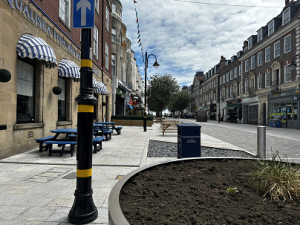 A streetscape improvement project in Eastbourne is helping to demonstrate how thoughtful infrastructure design can create safer and more accessible public spaces for blind and partially sighted people.
Eastbourne has one of the UK’s largest ageing populations. Thousands of residents live with sight impairment or visual accessibility challenges, making safe navigation through busy public spaces an important consideration within the town centre. Street furniture and poorly positioned obstacles can create significant difficulties and reduce confidence when moving around independently.
To help address these challenges, an accessibility-focused streetscape project was developed along the Victoria Place section of Terminus Road. The project was funded by Eastbourne Borough Council using Levelling Up Funds, working with East Sussex Highways, a partnership between Balfour Beatty Living Places and East Sussex County Council who were delivering the scheme The busy pedestrian route connects Eastbourne railway station with the seafront and is heavily used by both residents and visitors. Improving accessibility along this key route became an important part of the wider redevelopment works.
Attention was also given to how lighting columns would appear in different conditions, from bright summer daylight through to darker winter evenings.
James Powis, Key Accounts Manager, CU Phosco explains:
“This project was very different from a conventional column installation because accessibility considerations were central to the design process from the outset. Working closely with East Sussex Vision Support allowed the team to better understand the day-to-day challenges faced by blind and partially sighted pedestrians and how street furniture placement and visibility can directly affect confidence and safety within public spaces.
The consultation process included site walk-throughs, discussions around pedestrian movement and demonstrations showing how different visual impairments affect visibility in real-world environments. That feedback played an important role in shaping the final column arrangement and banding approach.”
CU Phosco supplied 21 lighting columns for the pilot scheme. A mixture of 5m and 8m columns were installed throughout the route. To remain in keeping with the wider
Eastbourne streetscape aesthetic, the team incorporated Heritage brackets in the final design.
One of the key features of the project was the introduction of yellow banding at multiple heights on the columns. Positioned at head, chest and waist height, the bands were designed to improve visibility for pedestrians with varying levels of sight impairment.
The choice of yellow was informed through consultation with accessibility groups and wider guidance around visual impairment. Yellow is widely recognised as one of the most visible colours for people with reduced vision and remains distinguishable across changing light conditions and varying levels of sight loss.
James Powis continues:
“Column placement was another important factor within the scheme. The team carefully considered pathway widths, pedestrian pinch points and the movement of guide dog users to help create a route that felt safer and easier to navigate.
While the project maintained the visual character of the surrounding environment, accessibility remained a priority throughout the design process.”
The completed scheme provides a more accessible pedestrian environment for blind and partially sighted users in the town centre. By improving the visibility of street furniture and carefully considering column positioning, the project aims to increase both physical safety and user confidence within a busy public realm setting.
Steve Saunders, Campaigner Quality and Access Lead from East Sussex Vision Support commented:
“You listened. It was important that this approach was carried through so that this seafront town is accessible to all. It makes a massive difference to visually impaired people and we hope to see similar schemes rolled out across East Sussex and beyond.”
To learn more about CU Phosco please visit https://www.cuphosco.com/


