



From Home to the Office: 3 Ways Outdoor Pole Light Fixtures Can Light up Your Space
Posted by: electime 2nd September 2020
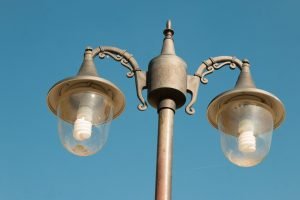 By 2027, the widespread use of LED lighting could save upwards of $30 billion a year in the United States. LED outdoor pole light fixtures are preferable to traditional artificial light sources. There are two compelling reasons. Their energy consumption is much lower, and their illumination is much more effective.
Let’s look at ways that you can upgrade your business premises or exterior spaces at home to keep them well-lit and secure.
1. Outdoor Pole Light Fixtures for Commercial Buildings With Adaptive Controls
Before upgrading to LED tech, check that your existing light pole is compatible with the new LED outdoor fixtures. LED lights are by no means the only type of pole light fixture available.
Improve commercial buildings, parking lots, and other public spaces with the strategic placement of pole lights and LED fixtures. Indeed, the International Dark-Sky Association (IDA) recommends reducing the blue light content of white LEDs.
IDA advises that pole lights face downward, rather than upward, and that you always use fully shielded LED fixtures.
Most warehouses and factories are best served by a combination of:
- well-placed fixed lights on light poles from dusk to dawn for basic illumination of high traffic areas
- selected light pole fixtures with adaptive controls such as motion sensors and dimmers
- bollard lights for walkways to the parking area
- wall-mounted lighting at entrances to buildings
This multi-pronged approach ensures good basic lighting, plus lighting in specific areas only when needed. Multi-level parking lots in The Netherlands provide a good example of how such an approach works.
Pole-mounted street lighting is suitable for large areas where there are no buildings. Such spaces would include parking lots outside warehouses and factories. They are also suitable for outside lights on residential properties.
2. Residential Properties
Poles for pole light fixtures on residential properties don’t have to be as high as standard street lights. Local building regulations should stipulate permissible height for residential pole lights. Permissible heights are likely to vary from one state to another. With light poles ranging in height from 8 feet to 50 feet, there is plenty of room for variation.
In many locations, warm weather and night-time bugs can be bothersome. Placing a single pole light in the garden away from the patio or back porch can help in keeping insects away from the house.
Use pole lights, e.g., with dual fixtures mounted, at home for garage and driveway illumination and security. They are also useful as garden features when you are entertaining outdoors.
3. Floodlights
Floodlights focus intense light in one large area. They are most common at sports arena events and fairgrounds.
Floodlights are better suited to certain activities than pole light fixtures of the streetlight type. Weighbridges at companies that operate around the clock spring to mind.
Light distribution types for floodlights and other pole lights have different classifications in the standards of the two following associations:
- IESNA, the Illuminating Engineering Society of North America
- NEMA, the National Electrical Manufacturers Association
Light distribution is the projected pattern of light on a given surface. Patterns are further distinguished by wide-beam and narrow-beam classifications.
All Things Electrical
We hope that this article on outdoor pole light fixtures has brightened your day. Be sure to look into the other articles on our website. They shed light on a wide range of information relating to the electrical contracting trade.


