








Installing electric sauna heaters in the UK
Posted by: electime 1st April 2021
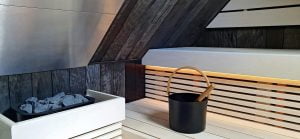 As gyms, health clubs and hotels have closed intermittently during the pandemic there’s been a surge in sales of home gym and spa equipment with people keen to create their own leisure facilities and wellness areas at home. The growing home sauna market is one small part of this huge industry and there is a range of products available on the market. Electric sauna heaters are a very popular choice for residential installations because they offer convenience, ever-evolving technology and aren’t restricted from urban areas in the same way some wood-burning sauna heaters sometimes are.
Getting the installation of electric sauna heaters right is very important. For those seeking a true Finnish sauna experience, the user must be able to liberally throw water on top of the sauna heater stones to create a steamy atmosphere which in turn helps to develop the numerous health benefits associated with the long term upkeep of the practice. A recent study showed that people who Finnish sauna bathed four to seven times a week were 66 per cent less likely to develop dementia and 65 per cent less likely to develop Alzheimer’s compared to those who did not. Impressively, the data was collected over a 20-year period and from around 2,315 individuals.
A crucial thing to bear in mind when deciding which electric sauna heater to install is the actual size of the sauna. The internal volume of the sauna dictates which power heater is required. The actual volume and ‘computational’ volume of the sauna may differ. The ‘actual’ volume is simply length x width x height, the ‘computational’ volume also takes into consideration factors such as how well insulated the sauna is and whether there is a lot of glass used in the design. Saunas with a large amount of glass and/or little insulation will require a more powerful heater. Every square metre of glass adds 1.5 cubic metres of computational volume for every square metre of single glazing, and 0.75 for double glazing.
Also, the power supply cable must comply with BS7671:2018 and, in accordance with European standard IEC 60364-7-703 part 703.412.5 an electrical sauna heater does not have to be connected through a Residual Current Device (RCD). This is also in accordance with BS7671:2018 part 703.411.3.3.
Robert Rigg of Eden Valley Electrical in Cumbria often works on electric sauna heater installations for authentic Finnish sauna specialists Finnmark Sauna. He said, “It’s important that any work is carried out by a competent electrician due to a “location containing a sauna heater” being considered a special location within BS7671 (Section 703), meaning any work completed on the sauna electrical installation is building regulations Part P notifiable. Finnmark sauna works exclusively with Finnish sauna heater company Narvi who build all their heaters in Finland and they recommend not to use an RCD to prevent nuisance tripping, it therefore often means the use of a steel-wire armoured cable in accordance with BS7671:2018 522.6.204. Saunas pose an additional set of external influences, particularly moisture and ambient temperature, that need to be taken into consideration when specifying materials for the electrical installation, but with careful installation design and quality lighting and ventilation equipment such as those supplied by Finnmark these can easily be compensated for.”


