








National Highways installs 825kW solar programme to accelerate depot decarbonisation
Posted by: user_amy 29th July 2026
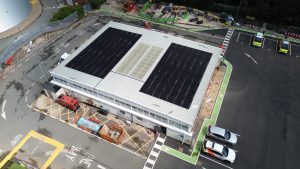
Synergize has completed a major decarbonisation programme across 16 operational sites for National Highways, installing more than 825kW of solar PV, 760kWh of battery storage, 18 air source heat pumps and 34 air conditioning units.
As part of its drive towards achieving net zero corporate emissions by 2030, National Highways engaged Harrogate-based building modernisation specialist Synergize through its SynZero division. The programme is expected to generate almost 650,000kWh of renewable electricity every year, reducing operational carbon emissions, lowering energy costs and strengthening energy resilience across the estate.
The programme forms part of National Highways’ wider strategy to decarbonise its operational buildings, which support the maintenance and operation of England’s strategic road network.
The National Highways North West Regional Operations Centre, at Rob Lane, Newton-le-Willows, is among the sites benefiting from the investment, where solar PV, battery storage and air source heat pumps have been installed to reduce reliance on fossil fuels while improving building performance and occupant comfort.
Programme highlights include:
-
16 operational National Highways sites upgraded
-
825kW+ of solar PV installed
-
760kWh of battery storage capacity
-
18 air-source heat pumps installed
-
34 air conditioning units installed
-
Nearly 650,000kWh of renewable electricity expected to be generated annually
Unlike many commercial retrofit projects, the works were delivered within fully operational depots, requiring careful planning and close collaboration to ensure day-to-day highway maintenance activities continued uninterrupted throughout the programme.
Many of the buildings involved date back several decades and were originally designed around traditional gas heating systems. The combination of renewable technologies has enabled National Highways to improve energy efficiency while modernising ageing building infrastructure.
Bobby McHale, Energy and Sustainability Manager at National Highways, said: “We have ambitious targets to achieve net zero for our operational emissions by 2030, so decarbonising our estate is one of our key programmes. The challenge was reducing our reliance on fossil fuels, making our buildings as efficient as possible and ensuring we deliver value for the taxpayer.
“The programme carried out by Synergize was efficiently planned and implemented to our high standards. The works have shown operational savings alongside carbon reductions, and it supports the wider transition towards electrification.”
The first operational data from completed sites is already demonstrating the effectiveness of the investment. Recent periods of strong solar generation have enabled battery systems to operate at full capacity, with National Highways reporting encouraging reductions in electricity consumption across its monthly energy monitoring.
Alongside supporting the organisation’s sustainability commitments, the programme also improves operational resilience by increasing onsite generation and reducing exposure to fluctuations in wholesale energy prices.
McHale added: “We’re a public sector organisation, so every pound we save on energy is a pound that can either be invested in other projects or ultimately returned to the taxpayer. At the same time, generating more of our own electricity helps strengthen our resilience against future energy market uncertainty.”
Carl Wright, Head of Decarbonisation at Synergize, said: “Decarbonisation projects are about far more than installing renewable technologies. Success comes from understanding how operational buildings function and delivering improvements without disrupting the essential services they support.
“The programme carried out by Synergize demonstrates how carefully planned retrofit projects can help public sector organisations reduce carbon emissions, improve energy resilience and deliver long-term operational savings while continuing to provide critical public services.”
The National Highways programme has been delivered using Solax inverter and battery systems, with solar arrays mounted using Clenergy or K2 mounting systems depending on roof construction. Together, the installations will support National Highways’ long-term decarbonisation strategy while helping future-proof its operational estate against rising energy costs and increasing sustainability requirements.


