






NEW 180-MINUTE CABLE FIRE RESISTANCE TEST WILL DRIVE FORWARD SAFETY STANDARDS IN HIGH-RISE BUILDINGS
Posted by: user_amy 10th August 2026
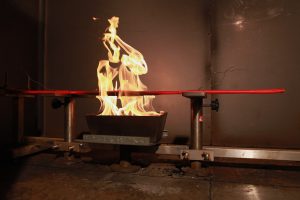
Kiwa has responded to evolving requirements for fire safety in high-rise residential buildings with the introduction of the world’s first certified 180-minute fire resistance test for cables.
The new 180-minute test as part of BASEC Certificate of Assessed Design (CAD058) goes beyond the 30, 60 and 120-minute benchmarks which form the basis of current standards for fire-resistant cables.
The prolonged burn test is set to drive standards as the construction of high-occupancy high-rise buildings continues to gather pace, posing ever more complex challenges for those responsible for fire safety.
Kiwa’s BASEC business unit conducts independent tests at its own laboratories, with the CAD providing assurance to all those involved in fire systems specification and management that the product still performs as expected even after 180 minutes’ exposure to fire.
James Daniels, Business Unit Manager at Kiwa, explained: “The current standards for 30, 60 and 120-minute fire-resistant cables have underpinned the design of life safety systems for many years. They still govern the design of systems such as fire detection and alarm systems, emergency lighting, emergency voice communication, smoke extraction and pressurisation systems, and firefighting infrastructure.
“However, these standards date from times when occupancy levels in high-rise buildings were generally lower, rather than being the densely populated hubs of both working and residential life which they have nowadays become.
“Meanwhile, the quantity of buildings exceeding 150 metres in height is rising rapidly, meaning more intense requirements around safety and evacuation, with more people needing to exit the building and having to cover more distance to do so.
“These greater physical heights and higher occupancy rates place greater demands on the systems designed to protect occupants against the risks posed by fire.”
James continued: “All of this means the role of interconnected active fire safety systems has never been more prominent. Should a fire break out, the integrity of circuits – and therefore the cables that connect critical fire safety elements – is vital. The longer these cables remain functional, the longer the time available for evacuation and emergency response.
“In short, the specification and installation of cables possessing the maximum level of resistance performance has the potential to save many, many lives.”
While the minimum fire resistance standards for cables have not yet been altered to reflect these changing building risk profiles, Kiwa believes it is only a matter of time given ever greater stringency in legislation and sector-specific regulation.
“Enacted in 2022 in light of the Grenfell disaster, the Building Safety Act has heightened the role of ‘Accountable Persons’ when it comes to the specification, installation, maintenance and performance of fire mitigation systems within high-rise buildings in the UK”, continued James.
“Cables are a particular challenge as they are hidden away, making maintenance and replacement far more difficult – increasing the pressure for best-practice decision-making in this area from the very outset.”
Regulation 38 now mandates that detailed, evidence-based fire safety information, such as photographs and commissioning records, must be supplied at project completion. At the same time, BS 9991:2024 significantly revised the UK’s fire safety code of practice for residential buildings, optimising evacuation procedures and enhancing structural protection, while minimising fire risks in modern residential buildings.
“Given the tightening regulations, building owners, managers and specifiers are increasingly going beyond current levels of compliance and seeking systems that are proven to perform at the highest level. Sooner rather than later, performance standards in fire resistance for cables will be tightened in line with this”, added James.
If adopted into BSI standards, CAD058 will be the force behind an effective tripling of circuit integrity performance, providing even greater resilience in buildings where firefighting may take place over an extended period, and evacuation may also need to be staged.
“The development of the 180-minute test further demonstrates how Kiwa is driving industry standards forward through rigorous testing and certification – providing greater resilience and peace of mind for owners, managers and building users that in the event of a fire, the specified cables will provide the fire resistance needed to keep occupants safe”, concluded James.
To discover more about the Certificate of Assessed Design from Kiwa, visit https://www.kiwa.com/gb/en-gb/services/certification/BASEC/.


