






Plug-in Solar Panels Safe for UK Homes, Government Study Finds — But Electrical Safety First Urges Caution
Posted by: electime 19th June 2026
A major government-commissioned study has concluded that plug-in photovoltaic systems can operate safely in UK homes without modification to existing wiring or consumer units — though the research has drawn measured criticism from Electrical Safety First, which warns that important gaps remain.
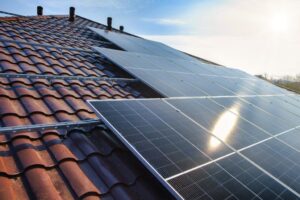 The Department for Energy Security and Net Zero (DESNZ) has published the results of a wide-ranging technical study into plug-in solar PV systems, providing the most comprehensive UK-specific evidence base to date on whether so-called ‘balcony solar’ products can be safely deployed by consumers without the need for professional electrical installation work.
The study, carried out by engineering consultancy Arceio Limited with laboratory support from Eurofins E&E UK, tested six commercially available plug-in PV devices — typically in the 400 W to 800 W AC export range — across a battery of scenarios designed to replicate the realistic and sometimes degraded conditions found in UK homes. These included aged socket outlets, coiled extension leads, mixed domestic loading, high ambient temperatures, and a range of modern and legacy protective device configurations.
What the Testing Found
Across the core safety tests, the results were broadly reassuring. Devices maintained stable thermal behaviour during sustained maximum-output operation, with no evidence of overheating at plugs, sockets, or wiring under representative conditions. Critically, existing circuit protection — including RCBOs and RCDs — continued to operate correctly when faults were introduced during plug-in PV operation, and no instance of sustained unintended energisation was observed after a protective device had tripped.
Anti-islanding performance — the ability of an inverter to detect the loss of mains supply and cease exporting power — was found to be particularly strong. All successfully tested devices disconnected well within the 500 ms limit specified by Engineering Recommendation G98, with many achieving disconnection times of just 16 to 19 milliseconds under synchronous disconnection conditions. The study describes this as confirming that the core inverter control logic of the tested devices is compatible with the fundamental safety expectation for small-scale grid-connected generation.
Reverse power flow — the export of electricity back along a domestic circuit in the opposite direction to normal — did not produce localised thermal hotspots or disproportionate conductor loading at the tested export levels, a finding that will be significant given that UK ring-final circuits were not originally designed with embedded generation in mind.
Where Concerns Remain
The picture was less uniform in other areas. Conducted electromagnetic compatibility (EMC) emissions exceeded the EN 61000-6-3 Class B limits applicable to domestic premises across the tested sample when measured at maximum rated export power — the condition the study’s authors argue should be mandatory for any future product specification. Notably, baseline domestic loads tested without any plug-in PV also exceeded Class B limits, pointing to a wider challenge with power electronics in the home rather than a hazard attributable to plug-in solar alone.
Export limitation accuracy also proved variable: while no device approached the broader G98 single-phase export threshold, two devices with declared 400 W ratings exceeded that figure during portions of the voltage sweep. Voltage and frequency threshold disconnection behaviour likewise varied between devices at the outer limits of the supply range. Taken together, these findings led the authors to conclude that the plug-in PV product category is not yet technically homogeneous enough to be treated as fully standardised, and that a UK qualifying product standard is needed.
One device also exhibited physical shrinkage of its AC cable sheath during prolonged high-temperature exposure — an observation the report flags as a material integrity concern, even though it was not accompanied by broader electrical instability.
A Controlled Pathway Forward
The study stops well short of recommending unrestricted ‘plug and play’ deployment. Instead, it proposes a framework built around six key elements: a defined qualifying product category; verified export and disconnection requirements; mandatory EMC assessment at full rated output; operationally specific consumer guidance; a simplified consumer registration system to give distribution network operators visibility of cumulative uptake; and product identification mechanisms to enable market surveillance by OPSS.
The report also notes that the appropriate UK export limit for plug-in PV has not been independently established by this study — the 800 W ceiling used during testing reflects European market convention rather than a hard safety threshold — and calls for the G98 amendment process currently under way to determine the correct figure for UK conditions.
The study is also frank about what it does not cover. It does not assess the impact of large-scale deployment on distribution networks, the long-term ageing of sockets and inverter components under real-world conditions, or the fire safety implications of systems mounted on balconies and external walls — an area it identifies as a priority for follow-on work, particularly in multi-occupancy buildings.
“Whilst we welcome the progress made on researching potential safety issues by the Government, we remain concerned the research published is limited in its scope.”
— Electrical Safety First
Electrical Safety First Calls for Further Assessment
The publication of the study has prompted a measured but pointed response from Electrical Safety First, which broadly welcomed the government’s research effort while urging that unresolved safety questions not be overlooked in any rush to bring the technology to market.
A spokesperson for the charity said: “Whilst we welcome the progress made on researching potential safety issues by the Government, we remain concerned the research published is limited in its scope. We believe work is needed to understand the impact of reverse energy flow on older type RCDs, which may be more common in homes across the country. Other areas of concern previously highlighted by the charity have yet to be assessed, such as the potential for DC leakage deriving from plug-in solar panels and the potential impact this may also have on certain RCDs.
“Any negative impact on an RCD could mean people are more exposed to a serious electric shock in the home. It is vital that any timetable for the roll out of these devices allows for a thorough assessment of remaining safety considerations and that any necessary safeguards are put in place before widespread deployment. We look forward to working with the Government on its new consultation into plug-in solar to help identify a safe and practical route forward.”
The charity’s concern about older RCD types is notable given that the study’s own test programme used modern Type A and Type AC RCBO-protected circuits. The study itself acknowledges that mixed legacy protective device configurations are a distinguishing feature of UK domestic installations and lists interaction with residual current protection as a key area where the UK cannot simply adopt international deployment experience without domestic qualification.
What Happens Next
The Government has already indicated that plug-in PV will be made available to UK consumers in the near term, and DESNZ has confirmed a new consultation into plug-in solar is under way. The study recommends that initial deployment be confined to products meeting clearly defined qualifying technical criteria, accompanied by a real-world monitoring programme to capture consumer behaviour and any cumulative effects not observable in a laboratory setting.
For the electrical industry, the implications are significant. The study concludes that plug-in PV occupies a genuinely novel regulatory space — sitting between consumer product regulation, electrical installation standards, and network-connected generation rules — and that none of the existing frameworks individually provides a complete fit. Coordination across product safety authorities, standards bodies such as BSI and the IET, distribution network operators, and DESNZ will be required to deliver a coherent implementation pathway.
For installers and electrical contractors, the study’s insistence that consumer guidance, socket condition, and installation quality all form part of the safety case — even in a plug-in model — suggests that professional advice will retain a role, even if full MCS-style commissioning is not required for qualifying devices.
View the report here: https://assets.publishing.service.gov.uk/media/6a32bfea0bea238415c9a1c0/Plug-in-solar-PV-study.pdf


