







Sites urged to test emergency power plans as disruption risks rise
Posted by: user_amy 15th July 2026
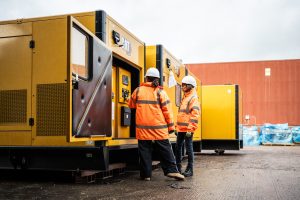
Finning UK & Ireland is urging operators of commercial, industrial and critical sites to test emergency power arrangements as extreme weather, infrastructure faults and unplanned outages put renewed focus on site-level resilience.
The power and energy specialist says organisations should not assume a reliable electricity network means their own site is protected from disruption, with National Grid advising that power cuts can still be caused by local faults, severe weather and other unforeseen events.
In June, the Met Office recorded the UK’s highest June temperature on record at 37.7°C at Lingwood in Norfolk, warning that very high temperatures can affect transport, energy and water supply.
Separately, infrastructure incidents have also shown how quickly local power disruption can escalate.
In March 2025, Heathrow airport had to close, and some 67,000 customers were affected after an outage at the North Hyde electrical substation. Flights were grounded for 16 hours as teams worked on the airport’s internal power network to test it and make it safe enough to be brought back online.
In total there were an estimated 25,000 unplanned power outages across the UK by the end of 2025, according to analysis by Utility Bidder, an increase of over 30% compared to the year previously.
Martyn Drinkwater, senior sales manager for Electric Power at Finning UK & Ireland, said: “Having access to a generator is not the same as having a tested emergency power plan. The starting point should be understanding what needs to stay live, what comes on first, what the peak load looks like, how long the site needs to run and whether the system has been tested under realistic conditions.
“That means looking at the load profile, starting current, fuel requirements, controls, monitoring and maintenance before an outage happens. If those questions are only being asked once power has already been lost, the response is likely to be slower, more expensive and harder to manage.”
Finning UK & Ireland supports customers with permanent and temporary power requirements, including generator sizing, site surveys, load assessment, package design, installation support, commissioning, load-bank testing, remote monitoring, service agreements and rental power where required.
Martyn added: “A backup system should be treated as part of the site’s wider continuity plan. If the first serious test happens during an outage, it may be too late to find out the generator is incorrectly sized, has not been maintained, is short of fuel or does not match the site’s actual demand.
“For sites supporting life safety systems, data access, refrigeration, manufacturing processes or healthcare environments, that planning becomes even more critical.”
To find out more, visit www.finning.com/en_GB/services/power-solutions.html


