








Overnight EV charging could create a new network peak twice the size of the evening one, Living Lab data shows
Posted by: electime 15th October 2026
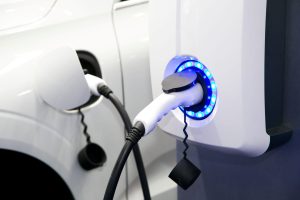 Cheap overnight EV tariffs could move the biggest daily spike in household electricity demand from the early evening to the middle of the night, according to new analysis from Energy Systems Catapult.
Data from 854 homes in the Catapult’s Living Lab shows that at around 48 per cent EV uptake, the highest daily demand peak moves into the night. At that level of adoption, the new overnight peak is twice the size of the traditional early-evening peak.
The Living Lab is made up of real households that use EVs and home chargers. Their data is used to build a virtual community that simulates what happens to the network as adoption grows.
The findings come as EV numbers keep rising. Figures from the Society of Motor Manufacturers and Traders show around 1.8 million battery electric cars now in use on UK roads, up 34.7 per cent on 2024.
Claire Rowland, Senior Manager for the Living Lab and Whole Energy Systems Accelerator at Energy Systems Catapult, said: “This shows how a solution like overnight charging, which works well at lower rates of adoption, could create new constraints as more households adopt the same technology and tariff.”
Uneven adoption, local pressure
The Catapult warns that EVs and heat pumps will change where and when demand peaks, as well as how much demand there is. Adoption is unlikely to be spread evenly. Several streets fed by the same transformer may take up new technologies much faster than the area around them, and spare capacity varies across the distribution network.
The problem can also run the other way. In areas with high solar uptake, many homes exporting at once on a sunny day can push up local voltage. That can trip protective systems in equipment such as EV chargers.
Rowland said reinforcement will still be needed in some places. But it is costly and can take years to deliver, so network operators also need to know where flexibility can free up capacity in existing assets. That could mean delaying EV charging, adjusting how heat pumps run, or using batteries to store power when generation is plentiful and release it at peak times.
She also pointed to a gap between national price signals and local conditions. “A supplier may offer cheap overnight charging because electricity is plentiful across the UK. However, dozens of EVs beginning to charge together could overload a local substation. The national signal is then encouraging precisely the behaviour that the local network needs to avoid.”
SSEN trial
The Catapult’s Whole Energy Systems Accelerator (WESA) connects real household demand and controllable low-carbon technologies to a simulated local network. It recently worked with Scottish and Southern Electricity Networks (SSEN) to test whether commercial flexibility services could help retire some “load managed areas” in northern Scotland. In these areas, the network has historically controlled when some electric heating systems switch on.
The trial flexed EVs, heat pumps and storage heating in up to 200 Living Lab homes. It mapped their real demand onto the virtual network to compare different control and pricing methods. One approach, “dynamic congestion response” using day-ahead forecasting, performed well enough that SSEN has proposed it for commercial use. The project also suggested that flexibility can be delivered in social housing without compromising household comfort.
“Combining modelling with real-world testing can help operators identify where flexibility is viable, where market arrangements need to change and where physical reinforcement of the energy network remains unavoidable,” said Rowland.
More information on WESA is available at es.catapult.org.uk/tools-and-labs/wesa/


